
How a Cold Roof Works
The problem: ice dams
Heat from the house leaks into the roof deck and melts the bottom of the snow. The water runs down to the cold eave, refreezes and builds a dam of ice. More meltwater backs up behind it and can push under the roofing. Heat tape and shoveling treat the symptom. A cold roof goes after one of the causes: heat reaching the roof surface.
How a cold roof helps
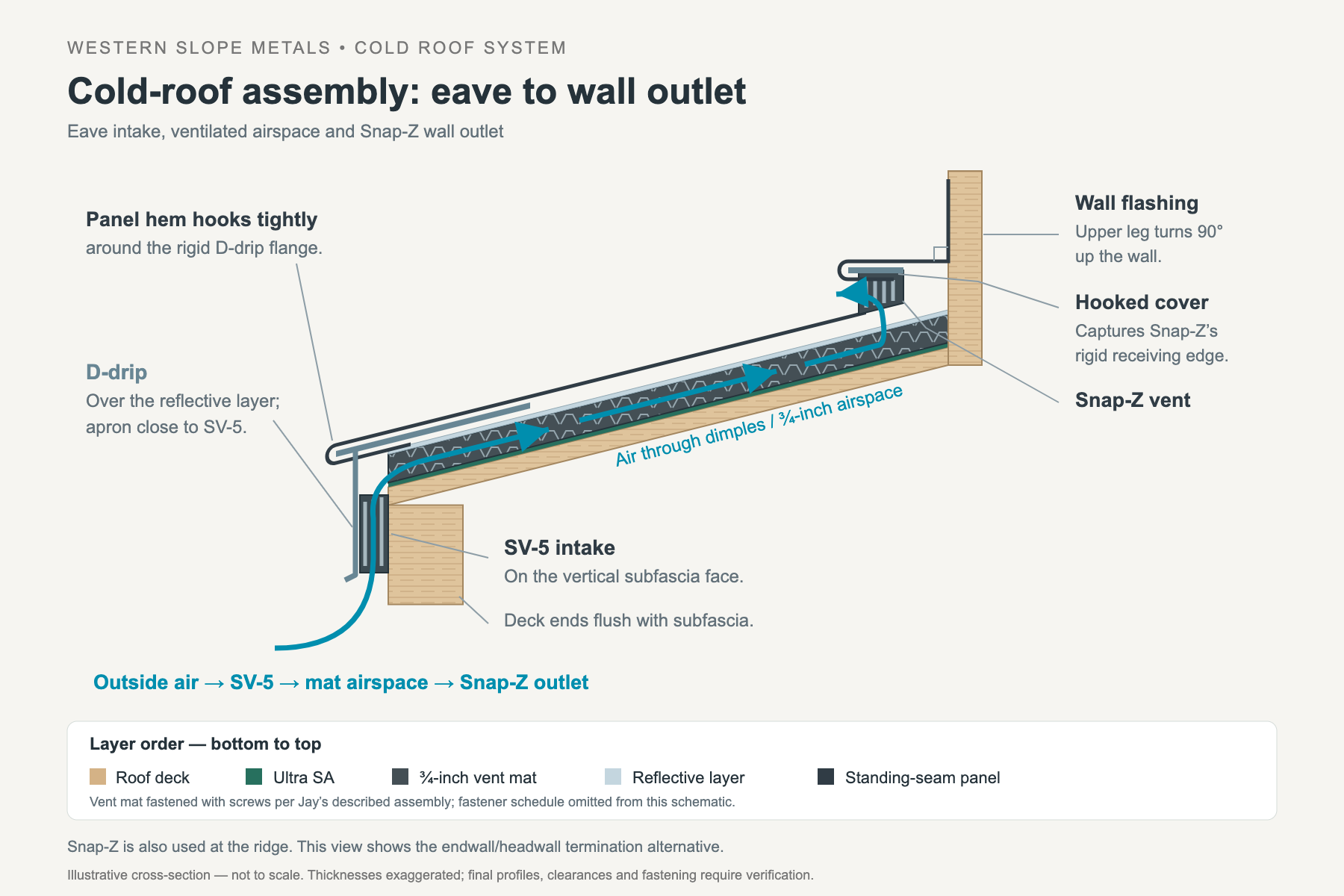
We build a ¾-inch ventilated air channel between the roof deck and the metal panels. Cold outside air enters at the eave, flows up under every panel and exits at a hidden ridge vent. That airflow carries away heat that leaks up from the house, helping the metal stay closer to the outdoor temperature so less snow melts from underneath. It also gives moisture under the metal a way to dry out.
Works best as part of a good building. Building-science research is clear that air leaks and insulation in the ceiling or roof below are the biggest factors in ice dams. A cold roof works with those, not instead of them. On every job we look at the attic or roof assembly with the owner or builder.
Proven in Europe for Generations
Ventilated “cold” roofs aren’t new. In the Alps and Scandinavia they’re the normal way to build a roof.
Germany, Austria & Switzerland
Pitched roofs are built with counter-battens that hold the roofing off the underlay so air flows from eave to ridge. German practice calls for at least a 2 cm (about ¾”) clear air space and continuous inlets at the eave.
Norway
Norway’s national building research institute (SINTEF) says pitched roofs need ventilation to avoid snow melting and ice forming in gutters and downspouts, and to dry out moisture.
European zinc roofers
Standing seam has gone over ventilated decks since the first zinc roof in 1809 (VMZINC). Today RHEINZINK and VMZINC require a structured mat under their panels so the underside of the metal can drain and dry.
Our system
We bring the same ideas to Western Slope homes: a full waterproof layer, a ¾-inch structured ventilation mat, and continuous air in at the eave and out at the ridge.
How We Build a WSM Cold Roof
From the prepared deck to the finished ridge, each stage has a job to do. These WSM project photos and credited product images show how the parts come together.
Sutherland Project, Grand Junction
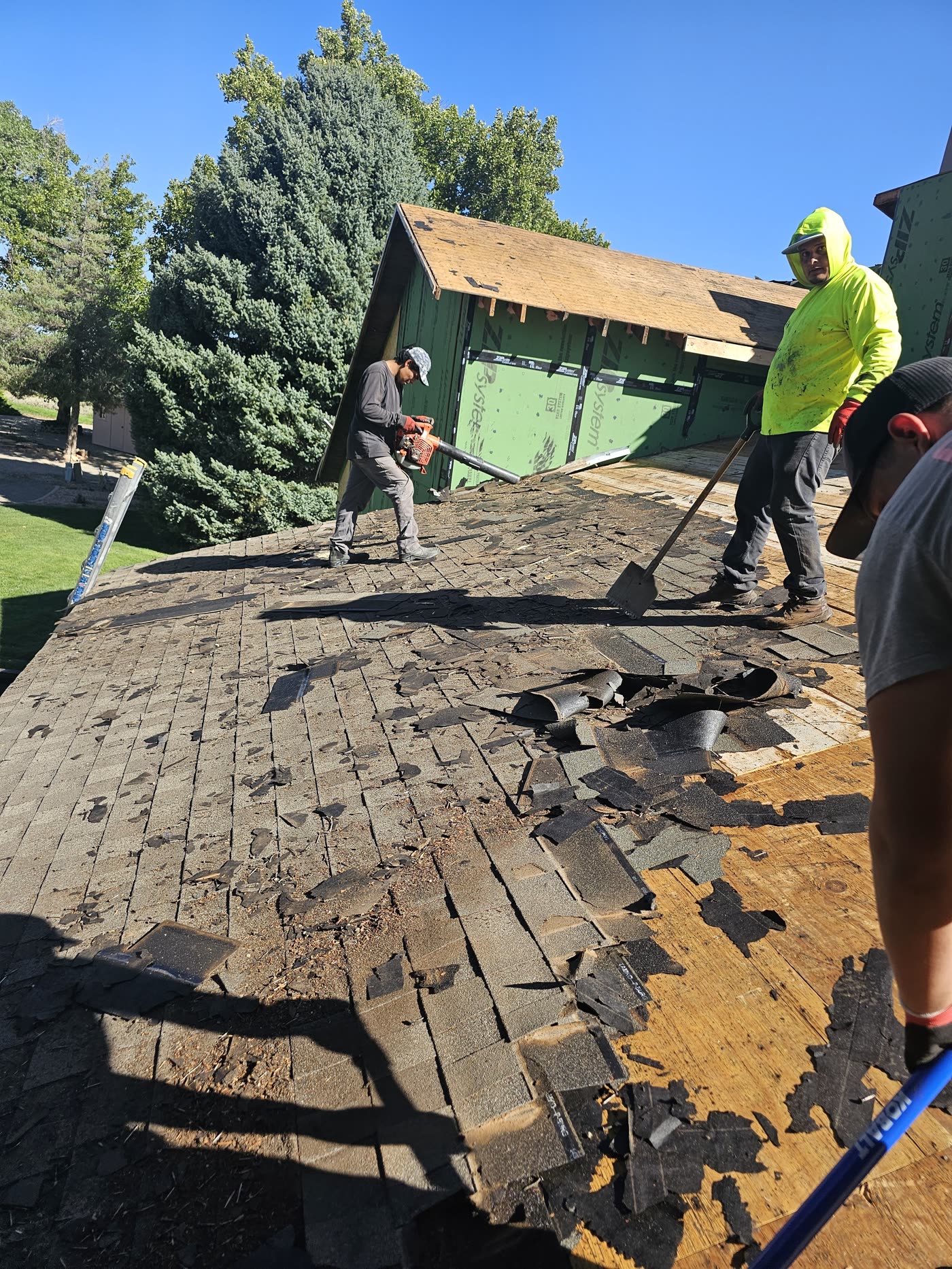
1. Prepare the roof deck
For a re-roof, we remove the existing roofing, inspect the deck and replace damaged sheathing before preparing a clean surface for the new system.
Taylor Project, Moab
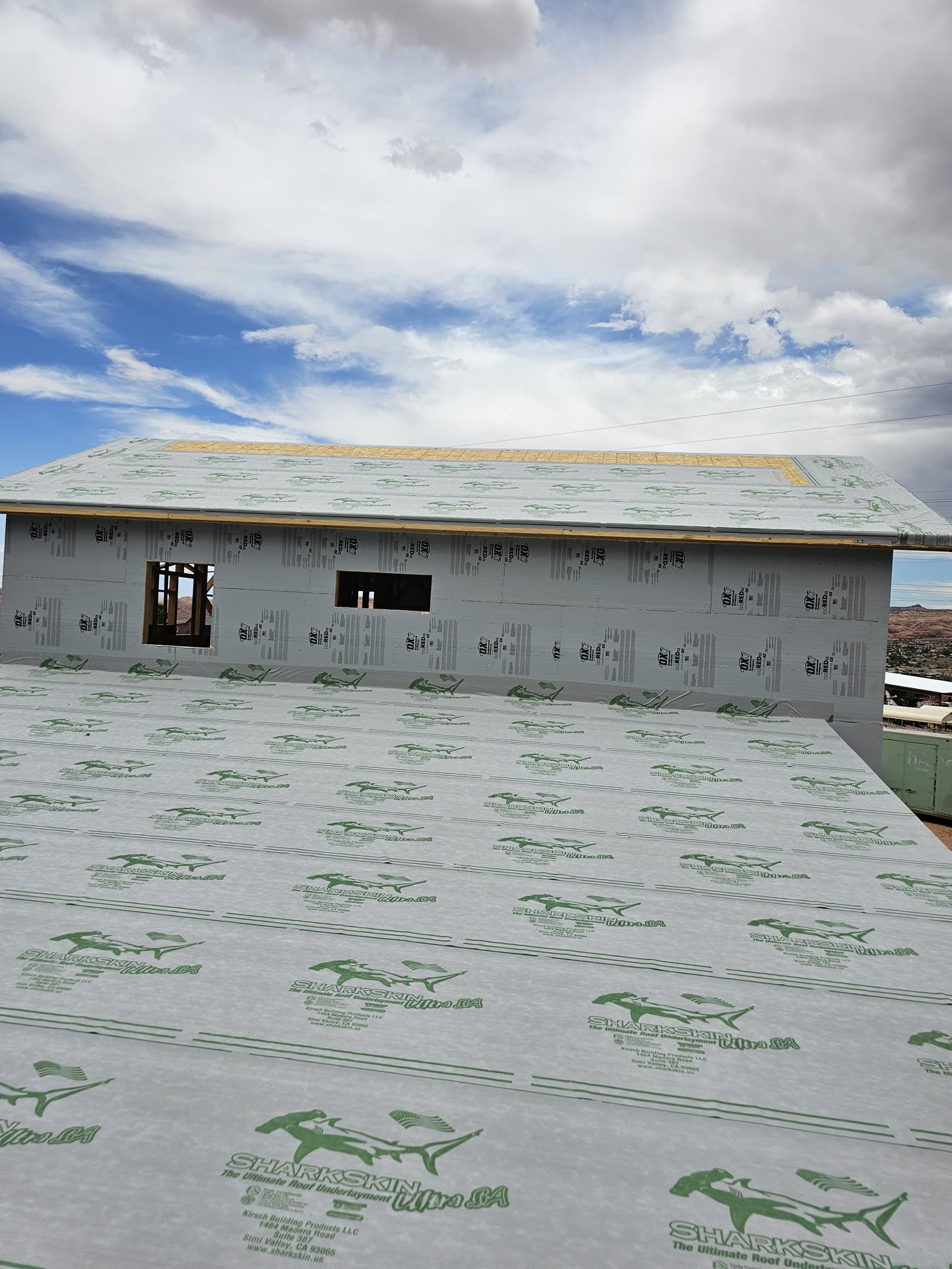
2. Install the waterproof underlayment
We apply Sharkskin Ultra SA over the entire roof deck, with the laps and adhesion detailed for a continuous backup water-protection layer beneath the metal.
Sutherland Project, Grand Junction
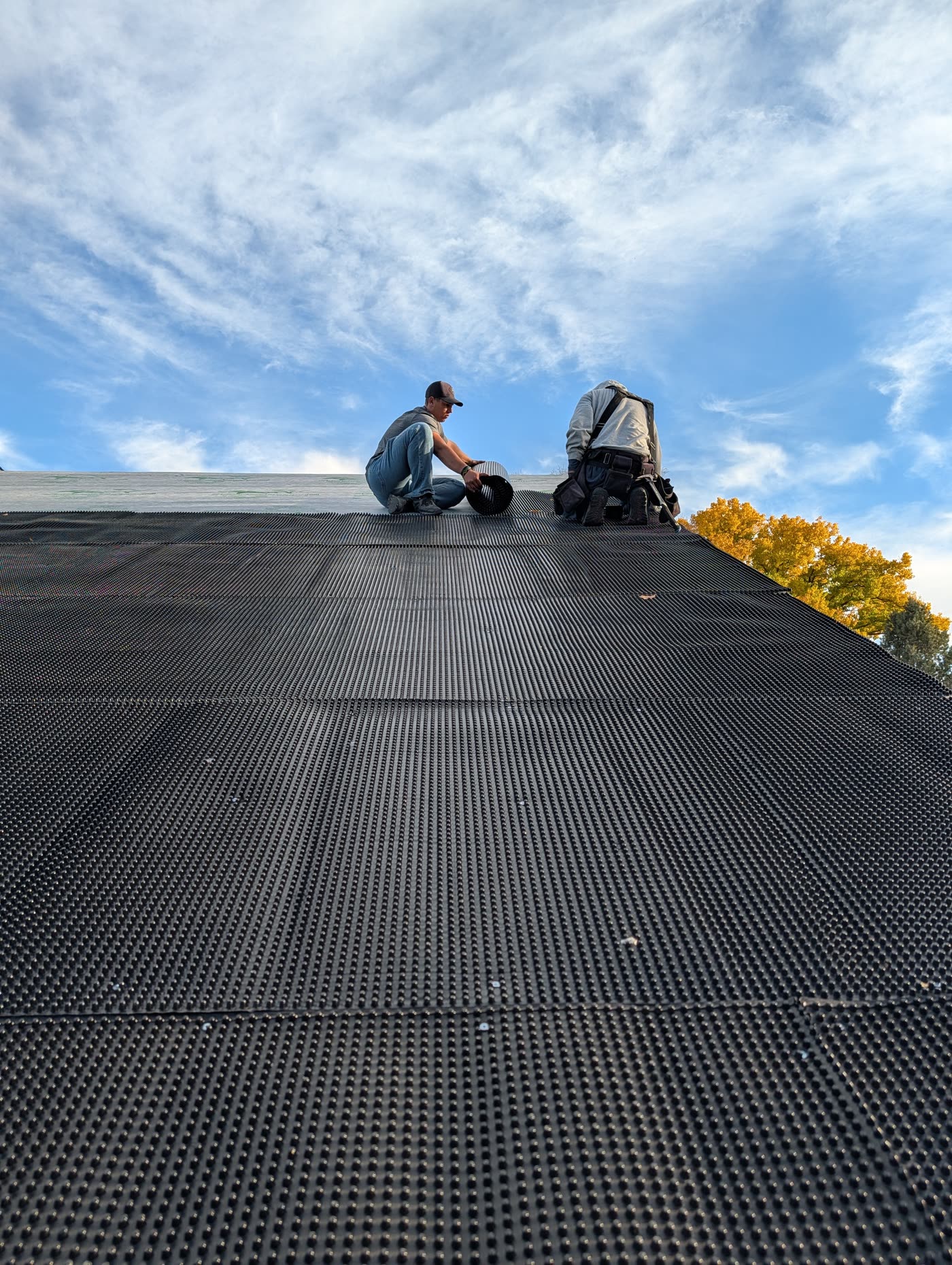
3. Create the ventilation channel
The Sharkskin ventilated mat holds the panels off the deck, creating a ¾-inch channel for airflow and drainage from the eave toward the ridge.
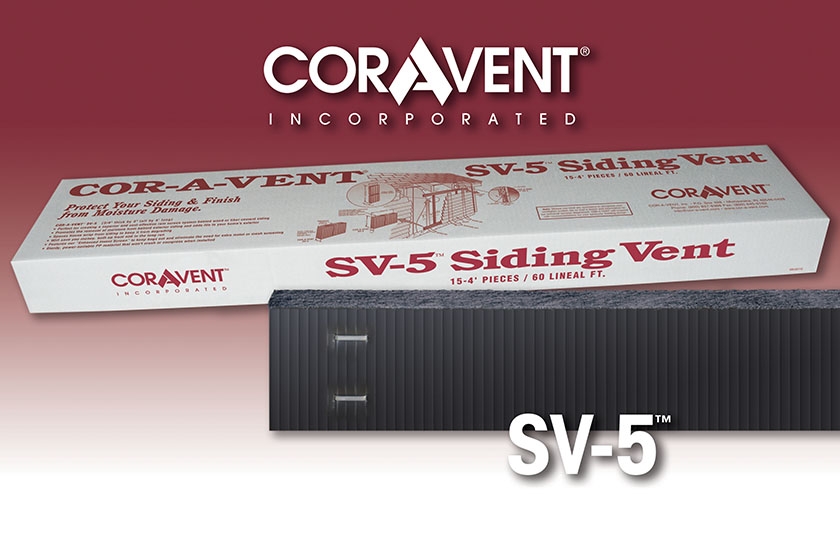
Photo: Cor-A-Vent
4. Provide airflow at the eave
Cor-A-Vent SV-5 provides a screened air inlet at the eave. Our drip-edge detail covers the intake while leaving a path for outside air to enter.
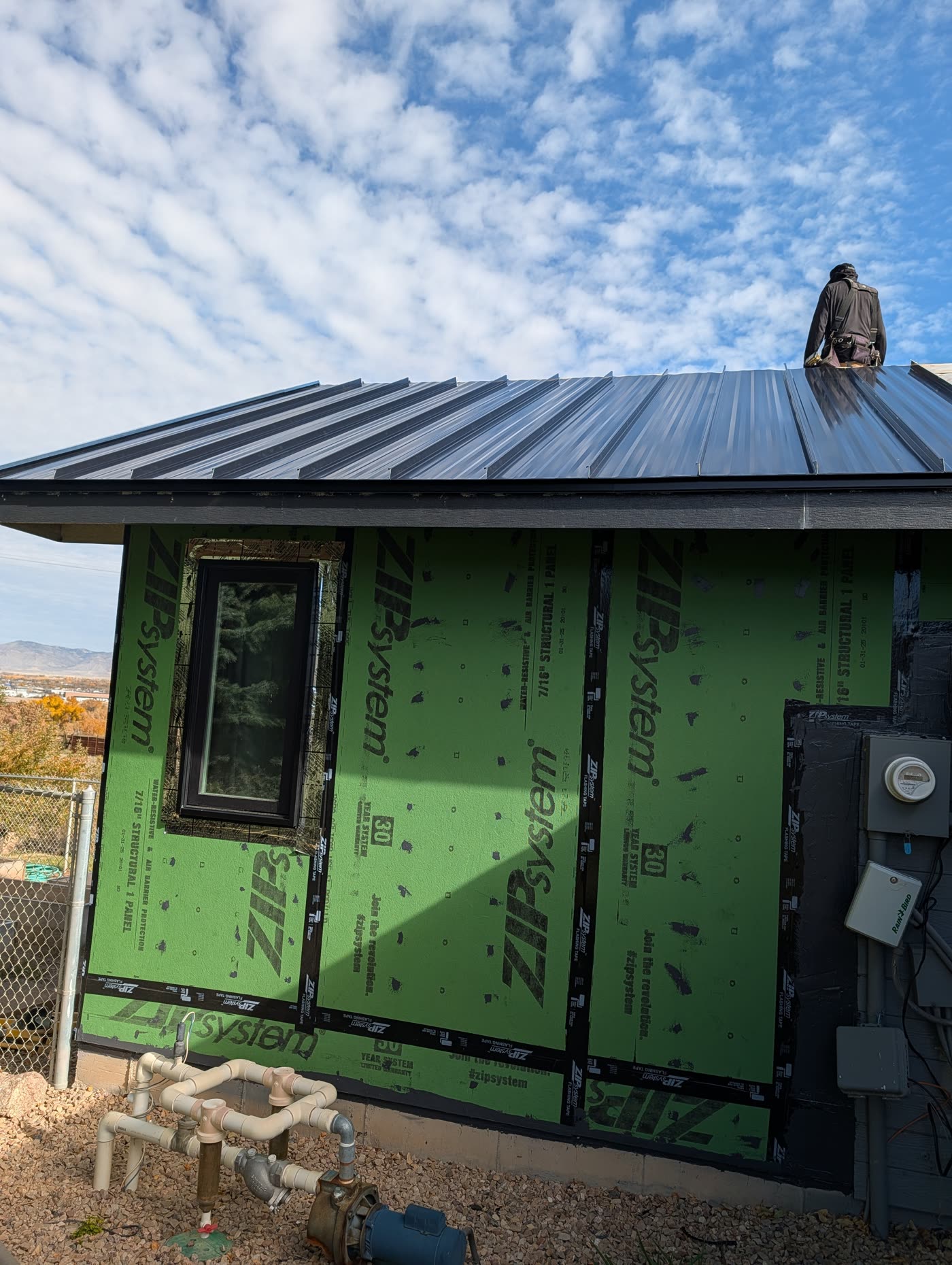
Sutherland Project, Grand Junction
5. Install WSM standing seam panels
We roll-form 24-gauge panels to the lengths the roof needs, then install them with concealed clips and the selected mechanical or snap-lock seam system.
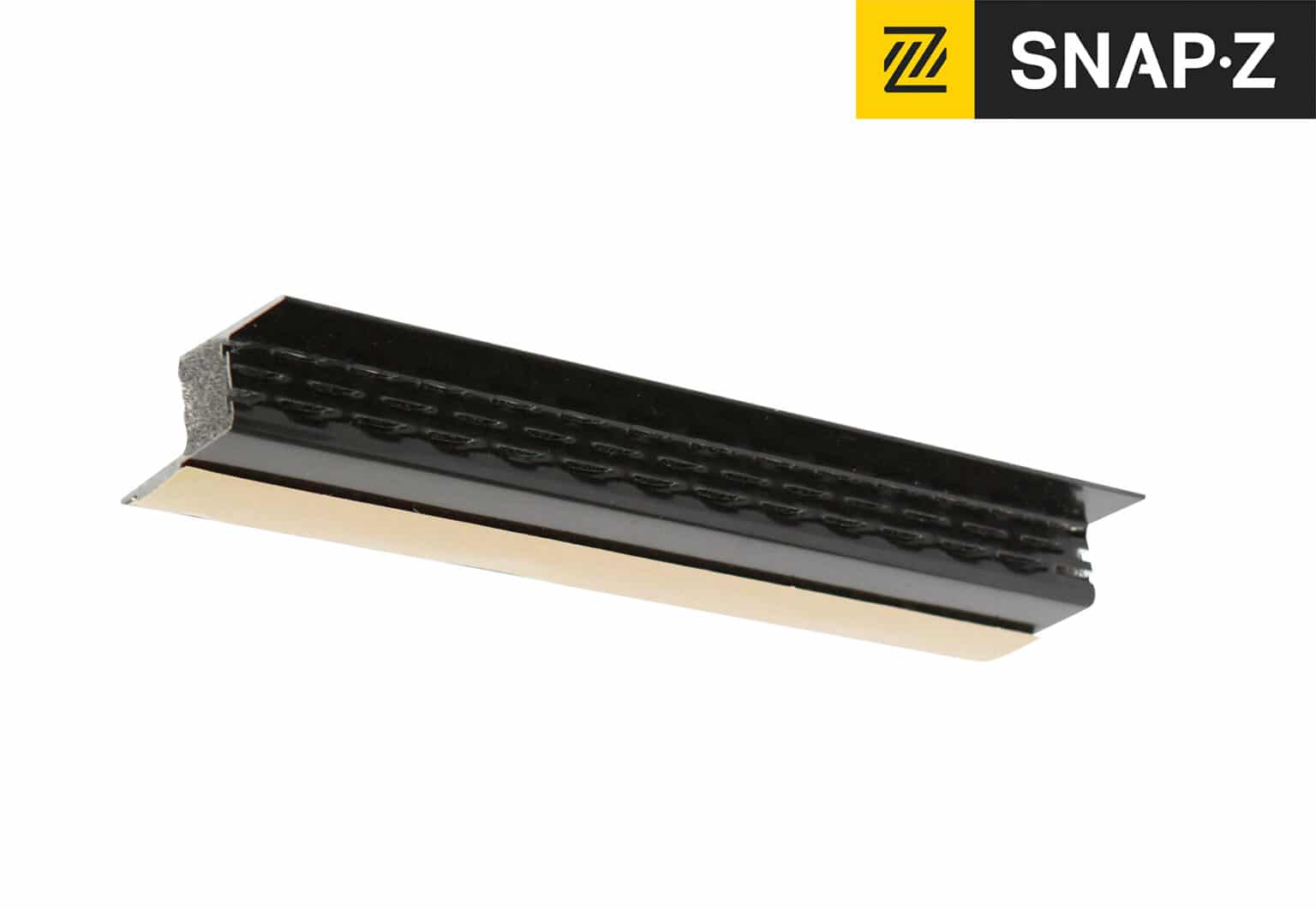
Photo: Snap-Z
6. Finish the ridge and flashings
Snap-Z vented closures provide the outlet beneath the ridge cap. Matching ridge, valley, eave and wall flashings are formed in our Delta shop to fit the roof.
Materials and technical details
Manufacturer-published ratings and material specifications for the components shown above. Suitability and detailing depend on the roof assembly.
Sharkskin Ultra SA
High-temperature self-adhered underlayment over the entire roof deck, not just the eaves. Zero asphalt, a 280°F synthetic butyl adhesive, installs down to 10°F.
Sharkskin Ventilated Roof Mat
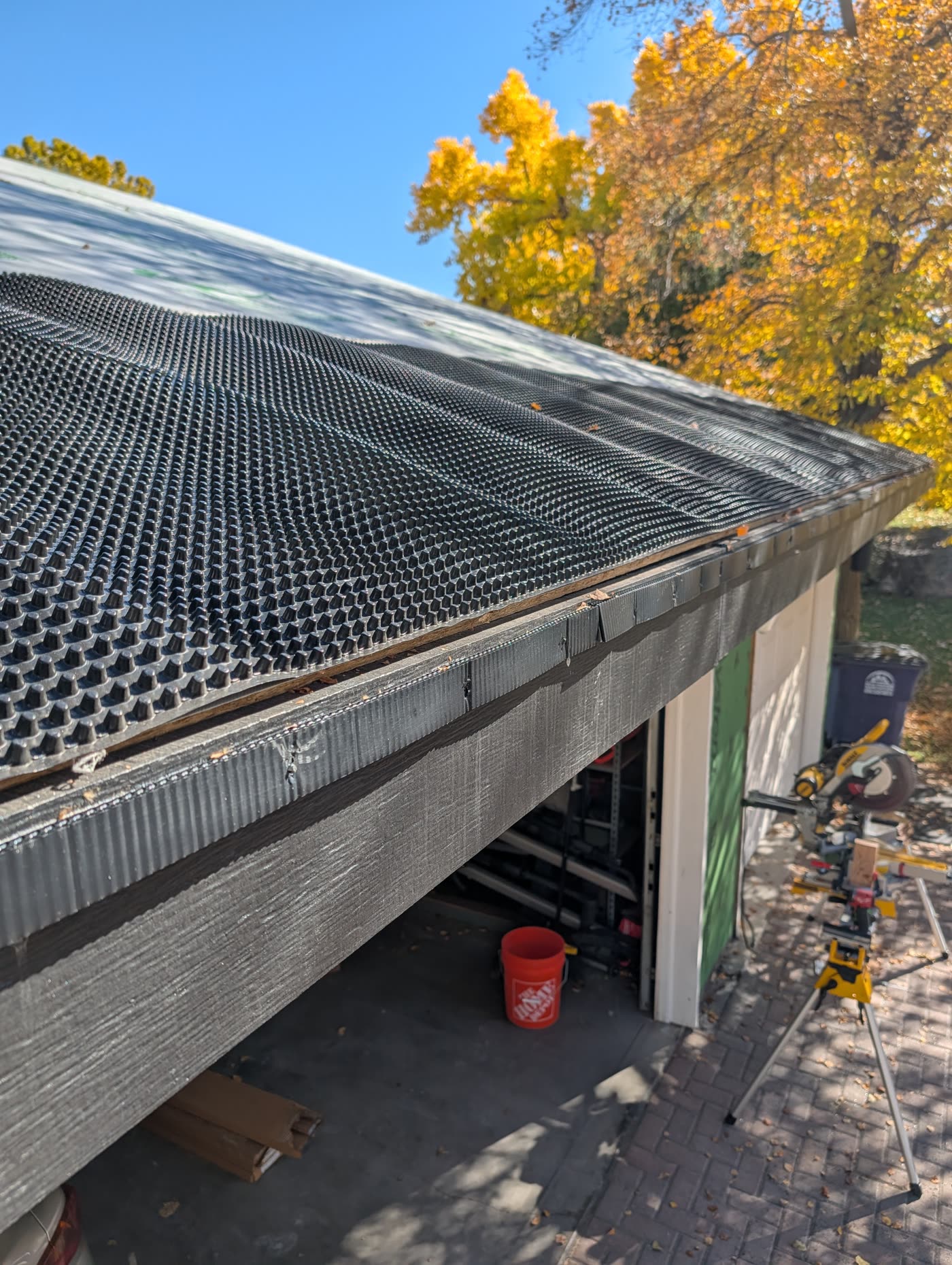
Dimple mat at the eave, Sutherland Project
A rigid dimple mat (13,500 psf compression rating per the manufacturer) holds the panels off the deck and creates a ¾-inch air and drainage channel from eave to ridge.
WSM standing seam panels
We roll-form our panels ourselves, to the exact lengths your roof needs, with concealed clips and mechanical or snap-lock seams. Coil and PVDF (Kynar) colors, matte and standard, come from Western States Metal Roofing.
Cor-A-Vent SV-5 intake
A continuous ¾-inch screened vent strip at the eave, matched to the mat height, lets air in and keeps bugs out. It’s hidden behind our drip edge.
Snap-Z ridge vent
Pre-cut vented closures fit between the seams under the ridge cap. Manufacturer-rated for zero snow infiltration, 80 mph wind-driven rain and 110 mph winds, with no foam closures to blow out.
Shop-made trim
Ridge, valley, eave and wall flashings are formed in our Delta shop to fit your roof, in matching color.
Why Homeowners and Builders Choose It
- Helps reduce ice dams by flushing house heat out from under the metal
- Helps keep the deck dry: air and drainage space lets moisture and condensation under the metal escape
- Backup protection: full-deck peel-and-stick under everything, in case ice or wind-driven snow gets under the panels
- May reduce the need for roof heat tape and shoveling (gutters may still need heat tape)
- Less summer heat moving into the house: the air channel vents solar heat out the ridge
- Roof ventilation is recommended by U.S. building-science guidance for high snow-load regions
- Steel standing seam: typically Class A fire and Class 4 hail ratings, 40–60+ year life (depends on panel and color)
Common Questions
Will it guarantee no ice dams?
No roof system can promise that. Ice dams depend on the whole house: air sealing, insulation, roof shape, sun and snow depth. A cold roof is one of the best tools available and works best with a tight, well-insulated ceiling or roof below.
Can a cold roof go on an existing house?
Yes. On a re-roof we tear off down to the deck, then install the full system. We’ll look at the attic or ceiling below with you.
Will snow get into the vents?
The ridge vent is manufacturer-rated for zero snow infiltration, and the eave intake is screened and tucked behind the drip edge.
Do I still need snow guards or heat tape?
Snow guards are still smart over doors, decks and walkways. A cold roof may reduce the need for heat tape on the roof itself; gutters and downspouts often still need it.
Is it more expensive?
It adds the ventilation mat, intake and ridge vents, and some labor. That’s usually a small part of the cost of a standing seam roof, and ice-dam repairs can cost far more.
Do Your Own Research
Products we use
- Sharkskin Ultra SA underlayment (Kirsch Building Products)
- Sharkskin Ventilated Roof Mat
- Western States Metal Roofing standard and matte colors (our coil supplier). Ask us for the color chart.
- Cor-A-Vent SV-5 vent strip
- Snap-Z standing seam ridge vents
Ice dams and roof ventilation
- Building Science Corp.: Dam Ice Dam (BSI-046)
- U.S. DOE Building America: Roofs for ice dam prevention
- VMZINC: vented cold roof standing seam
- Klima2050 / SINTEF (Norway): roof air gap design
- German counter-batten roof ventilation
Product ratings are the manufacturers’ published figures. Sharkskin is a trademark of Kirsch Building Products; Snap-Z is a trademark of Snap-Z LLC.
Western Slope Metals supplies, roll-forms and installs standing seam roofs across the Western Slope, from Delta and Montrose to Telluride, Ridgway, Crested Butte and the North Fork. Ask us about a cold roof for your project.
Call (970) 975-0612 · info@westernslopemetals.co
1454 Hwy 50, Delta, CO 81416
More from Western Slope Metals: Standing seam roofing · Metal roofing · Contractors · Contact us